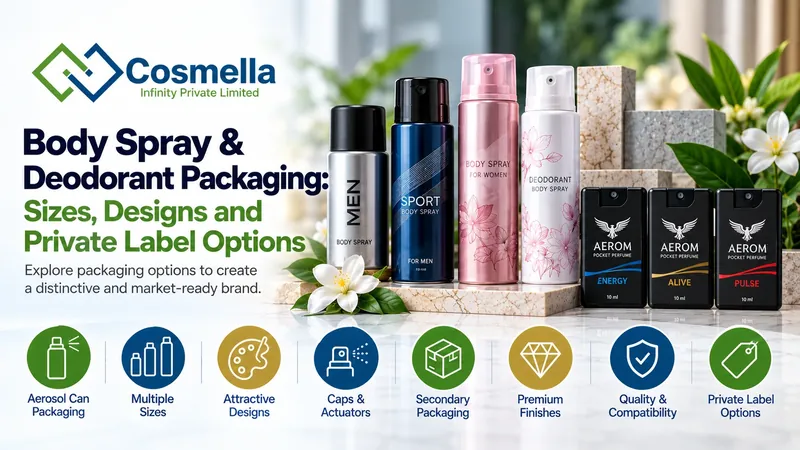
Packaging plays an important role in the success of a body spray or deodorant brand. It protects the product, supports convenient application, communicates brand identity and helps differentiate products in a competitive personal-care market.
For brands planning to launch their own fragrance or deodorant range, selecting the right packaging involves more than choosing a colour or designing an attractive label. Can size, material, valve system, actuator, finish, product compatibility and target-market requirements all need to be considered.
At Cosmella Infinity Private Limited, we support private-label and contract manufacturing for fragrance and aerosol-based products, helping brands explore product development, packaging and manufacturing options for domestic and international markets.
1. Understanding Body Spray and Deodorant Packaging
Body sprays and aerosol deodorants are commonly packaged in pressurised containers designed to dispense the product as a controlled spray.
Depending on the product and application, packaging may include:
Aerosol cans
Spray valves
Actuators or spray buttons
Protective caps
Printed or decorated can surfaces
Labels, where appropriate
Outer cartons and secondary packaging
The packaging needs to work with the formulation and dispensing system while meeting the brand's functional and visual requirements.
Before selecting a packaging format, brands should define the intended product, target audience, price segment and sales market.
2. Types of Body Spray Packaging
Aerosol Can Packaging
Aerosol cans are widely used for body sprays and deodorants. They provide a compact format for storing and dispensing suitable pressurised formulations.
Important considerations include can material, capacity, valve compatibility, actuator design, product compatibility and applicable safety requirements.
The final packaging system should be selected according to the formulation, intended use and manufacturing process.
Pump Spray Packaging
Pump sprays dispense a product through a manually operated pump rather than an aerosol propellant system.
They may be suitable for certain body mists and fragrance products, depending on the formulation and desired spray characteristics.
Pump sprays and aerosol sprays are not interchangeable in every application. The product formulation and packaging need to be designed for the selected dispensing system.
Travel and Pocket-Size Packaging
Compact formats can help brands develop portable products for handbags, travel kits, gym bags and everyday use.
For pressurised mini aerosol products, the can, valve and packaging system must be suitable for the product and intended distribution conditions.
3. Body Spray Packaging for Men
Men's body spray packaging often uses design elements associated with freshness, energy, sport and sophistication.
Popular design directions may include:
Black, navy blue and charcoal
Silver and metallic finishes
Bold typography
Geometric patterns
Minimalist premium designs
Sport-inspired graphics
The appropriate design depends on the brand's positioning. A premium fragrance line may use understated metallic details, while a mass-market body spray may use bold colours and high-contrast graphics.
Brands should also consider how the packaging looks when displayed alongside other products in the same range.
4. Body Spray Packaging for Women
Women's body spray packaging can use a wide variety of design directions, from elegant and minimalist to colourful and expressive.
Possible design approaches include:
Rose gold and metallic finishes
Soft pink, lavender and pastel colours
Floral patterns
Clean white and silver designs
Bright colours for youthful product ranges
Premium finishes for fragrance collections
Packaging should reflect the intended fragrance profile, audience and price segment rather than relying on colour alone.
A consistent visual identity across different fragrances can help establish a recognizable product family.
5. Pocket Body Spray Packaging
Pocket body sprays are designed around portability and convenience.
They can appeal to consumers who want a compact fragrance product for everyday use, commuting, travel or quick refreshes throughout the day.
When developing a pocket-size product, brands should consider:
Can capacity
Overall dimensions
Weight and portability
Spray performance
Cap security
Packaging durability
Label readability
Applicable transport and safety requirements
Smaller packaging does not necessarily mean that the manufacturing process is simpler. Compact aerosol systems still require appropriate component compatibility and quality checks.
Brands should confirm available sizes and minimum order quantities with their manufacturing partner.
6. Choosing the Right Aerosol Can Size
The right packaging size depends on the product concept, intended use, target price and distribution channel.
Common size categories to explore include:
Compact formats: for pocket and travel-oriented products
Everyday formats: for regular personal-care use
Larger formats: for consumers seeking greater product quantity
Actual available capacities depend on the manufacturer and packaging supplier. For aerosol products, nominal can capacity and the permitted product fill are not necessarily the same.
Brands should confirm the container specification, filling limits, net quantity declaration and applicable requirements before finalizing the product.
7. Aerosol Can Materials and Finishes
Packaging material and finish influence both product compatibility and visual presentation.
Depending on availability and product requirements, brands may evaluate metal aerosol containers and different exterior finishes.
Possible design options include:
Gloss finishes
Matte finishes
Metallic colours
Printed graphics
Minimalist branding
Contrasting caps and actuators
Material selection should not be based solely on appearance. Compatibility with the formulation, corrosion resistance where relevant, container integrity and the intended manufacturing process must also be evaluated.
8. The Importance of Valves and Actuators
The valve and actuator are essential components of an aerosol packaging system.
The valve controls product discharge, while the actuator helps direct and shape the spray.
Their selection can influence:
Spray pattern
Dispensing performance
Ease of use
Product consistency
Compatibility with the formulation
Overall user experience
For this reason, the can, valve, actuator and formulation should be assessed as a complete system.
A packaging design that looks attractive but does not deliver the intended spray performance may not be suitable for commercial production.
9. Branding and Label Design
For private-label brands, packaging is an important opportunity to communicate product identity.
Before artwork approval, brands should consider:
Logo placement
Brand colours
Product name
Fragrance variant
Net quantity
Typography
Readability
Required declarations
Warning and usage information
Barcode and other commercial information, where applicable
The packaging should maintain a clear visual hierarchy so consumers can identify the brand and product quickly.
For product ranges with multiple fragrances, a consistent design system can help distinguish variants without losing brand recognition.
10. Secondary Packaging and Retail Presentation
Secondary packaging can support product protection, retail display and premium positioning.
Depending on the product and sales channel, it may include:
Individual cartons
Multipacks
Gift packaging
Display boxes
Protective shipping cartons
The need for secondary packaging depends on the product, distribution channel, retail requirements and shipping conditions.
For export-oriented brands, packaging should also be evaluated for the expected transportation and storage environment.
11. Packaging Compatibility and Quality Control
Packaging should be evaluated together with the final formulation before commercial production.
Depending on the product, relevant checks may include:
Container compatibility
Leakage evaluation
Corrosion assessment, where relevant
Valve and actuator performance
Spray pattern
Fill quantity
Stability evaluation
Packaging integrity
Batch consistency
Aerosol products require particular attention because they are pressurised. Appropriate manufacturing controls, equipment and safety procedures are important throughout filling and quality evaluation.
The exact tests depend on the formulation, packaging system, applicable standards and intended market.
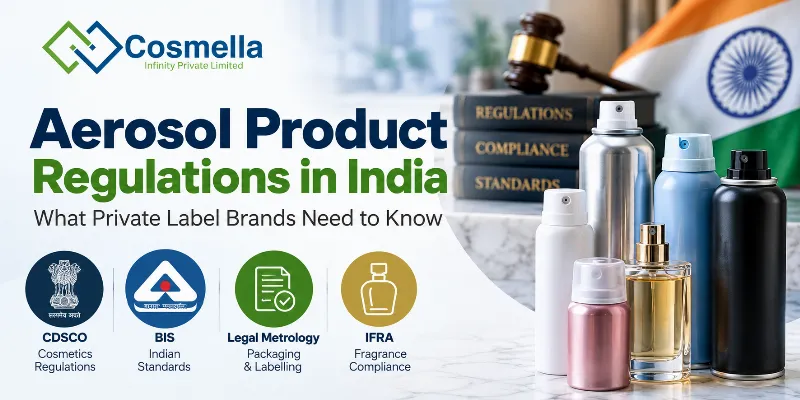
12. Packaging and Compliance for Domestic and Export Markets
Packaging requirements may differ according to the country where the product will be sold.
For products marketed in India, applicable cosmetic labelling and packaged-commodity requirements should be evaluated for the specific product.
The official CDSCO Cosmetics Rules, 2020 provide the regulatory framework for cosmetics covered by those rules.
For packaged commodities, brands can also consult the Department of Consumer Affairs for information relating to Legal Metrology requirements.
For exports, additional destination-market requirements may apply, including rules on product information, ingredients, claims, warnings and packaging.
Brands should identify their target markets early so that packaging artwork and product specifications can be evaluated before production.
13. How to Choose Packaging for Your Private Label Brand
Before approving packaging, consider the following questions:
Who is the target customer?
What fragrance and product category are you launching?
Is the product positioned as premium, mass-market or value-oriented?
Which packaging sizes are available?
What can material and finish suit the product?
Does the valve and actuator deliver the intended spray?
Is the packaging compatible with the formulation?
What labelling and regulatory requirements apply?
What are the minimum order quantities and lead times?
Can the packaging support future product-line expansion?
Answering these questions early can help reduce unnecessary design changes and production delays.
14. How Cosmella Supports Private Label Body Spray and Deodorant Manufacturing
At Cosmella Infinity Private Limited, we support brands exploring private-label and contract manufacturing for fragrance and aerosol-based products.
The manufacturing process can involve coordination across product concept, formulation, fragrance selection, packaging, filling and quality control, depending on the project requirements.
For brands planning to launch body sprays or deodorants, the packaging discussion should begin with the intended product, target customer, market and estimated production volume.
This helps establish a practical direction for packaging selection and product development.
Whether you are developing a new fragrance range or expanding an existing personal-care portfolio, your packaging should support both the brand's identity and the product's technical requirements.
Frequently Asked Questions
What packaging is commonly used for body sprays and deodorants?
Aerosol cans are commonly used for body sprays and deodorants. Certain body mists and fragrance products may use pump-spray packaging, depending on the formulation and intended application.
What is the best packaging size for a body spray?
The best size depends on the target customer, product positioning, price point and intended use. Compact formats may suit portable products, while larger formats may suit everyday use. Actual sizes and filling limits should be confirmed with the packaging supplier and manufacturer.
Can I create separate packaging for men's and women's body sprays?
Yes. Brands can differentiate products through colours, graphics, typography, finishes and fragrance-variant identification while maintaining a consistent overall brand identity.
What is pocket body spray packaging?
Pocket body spray packaging refers to compact formats designed for portability and convenient everyday use. The available options depend on the packaging system and manufacturer.
Can I customize aerosol can packaging for my brand?
Customization options may include printed graphics, colours, finishes, caps, actuators, labels and secondary packaging. Availability, minimum order quantities and lead times depend on the selected components and supplier.
Is packaging compatibility important for aerosol products?
Yes. The formulation, container, valve, actuator and propellant system need to be suitable for one another. Appropriate compatibility and quality checks help support product performance and packaging integrity.
Can Indian manufacturers supply private-label body sprays for export?
Indian manufacturers can produce products for export, subject to the manufacturer's capabilities and the applicable product, manufacturing, documentation and destination-market requirements.
Conclusion
Body spray and deodorant packaging is an important part of private-label product development. The right packaging needs to balance visual appeal, convenience, product compatibility, spray performance and applicable regulatory requirements.
From men's and women's body sprays to pocket-size formats and premium fragrance collections, packaging decisions should be guided by the target customer and the technical needs of the product.
For brands planning to launch or expand a fragrance range, working with a manufacturing partner early in the packaging process can help coordinate product development, packaging selection and commercial production.
Planning to launch your own body spray or deodorant brand?
Contact Cosmella Infinity Private Limited to discuss your private-label and contract manufacturing requirements for the Indian or international market.
Disclaimer
Packaging options, available sizes and regulatory requirements depend on the specific product, formulation, packaging components and target market. Brands should confirm technical specifications and applicable requirements with their manufacturer, packaging supplier and qualified regulatory professionals before commercialization.
Have a query?